Latest Posts…click on headline to read

<< >>

Build Your Own Spice Mixes

Spices are one of the easiest things to add to a dish for flavor. The chefs from Local Organic Meals on a Budget classes last season introduced us to some interesting spices like cardamon, fennel, star anise and more. Spices can take you to different parts of the world like Asia, Northern Africa, Mediterranean and [...]

Roasting Vegetables

Fall brings many root vegetables like carrots, beets and turnips. There are more interesting ones such as celeriac, parsnips and rutabagas. Winter squash is also in season with butternut squash, kombucha and acorn squash. Even broccoli and cauliflower will gain a great carmelized flavor in the oven. All of these can be roasted with the [...]

Spaghetti Squash Side Dish Recipe

A spaghetti squash gives hundreds of squash strands that look like pasta.  It is in season this fall and grows locally.  It can make a great side dish to a Thanksgiving dinner.   My family is Italian so there is fennel, local cherry tomatoes and fresh Mediterranean herbs.   This was a hit at our house last [...]

Fall Stir Fry

This fall, the Farmers Market is full of organic root vegetables, cabbage and winter greens.  They may seem heavier than the lighter summer greens, tomatoes and squash, but they can come together in an easy stir fry.  This is a dish that has some basic types of ingredients that you can mix for a recipe. [...]

Build Your Own Spice Mixes

Spices are one of the easiest things to add to a dish for flavor. The chefs from Local Organic Meals on a Budget classes last season introduced us to some interesting spices like cardamon, fennel, star anise and more. Spices can take you to different parts of the world like Asia, Northern Africa, Mediterranean and India with the same vegetables and meat ingredients.

Buying spices is easy in Santa Fe.  There are a few speciality shops like Ziggy’s International Market on Cerrillos or The Spice Lady on Cordova that sell international spices and ingredients.  The Spice Lady also sells dried spices in bulk so that you can try a smaller amount.  The Coop and Whole Foods Grocery Stores sell spices in bulk as well. Buying in bulk allows you to buy a small amount for a recipe or try a spice with your family. One of the best deals for spices is at Natural Grocers on Cerrillos. They have a huge selection and some of the harder ones to find.

Storing spices should be in a sealed container.  Small glass canning jars work the best. Try to buy the seed or whole spice so that it will last longer than the dried powder. If the spice is whole, it can also be toasted in a dry pan for a few minutes to bring out the aroma and flavor in your kitchen.

Once you have the whole spices that you enjoy, you can make spice mixes with a coffee grinder or mortal and pestel. Many cookbooks will list spice blends for the recipe.  Mark Bittman’s How to Cook Everything devotes a chapter to spices and sauces. I made four spice blends over the weekend to be ready for cooking.  Here is one of my favorites that can be used with meats, lentils and vegetables.

Hot Curry Powder

From How to Cook Everything

2 small chiles

1 tblsp black peppercorns (you can use white to make it less spicy)

1 tblsp coriander seeds

1 tsp cumin seeds

1 tsp fennel seeds

1 tsp fenegreek (I found at Natural Grocers)

1 tblsp ground tumeric

1 tblsp ground ginger

Cayenne, if needed.  Test your mix first.

Enjoy!

Amy Hetager, Local Organic Meals on a Budget Blogger

Roasting Vegetables

Fall brings many root vegetables like carrots, beets and turnips. There are more interesting ones such as celeriac, parsnips and rutabagas. Winter squash is also in season with butternut squash, kombucha and acorn squash. Even broccoli and cauliflower will gain a great carmelized flavor in the oven. All of these can be roasted with the same basic recipe.

Roasting vegetables is a great way to bring out the sweetness and flavor. It is an easy recipe that you can use for all of these vegetables.

Roasted Vegetables

Any mix of vegetables

Kosher Salt

Fresh Cracked Black Pepper

Olive Oil

Peel and chop all of the vegetables into the same size of cubes with a sharp knife. It is important that they are a similar size so that they roast at the same rate. Some of the vegetables are very hard and round so you may need to have the bottom cut off to steady on the cutting board.

Olive oil, kosher salt and pepper are the only ingredients that you need to add to the vegetables. You can also add spices such as rosemary, oregano or thyme. Sliced onions and garlic cloves can be added as well for more flavor. Add the olive oil by pouring it into your hands.  Pick up the vegetables to add it. This will add a more consistent coating than pouring it onto the veggies in the pan. If you have beets, keep them in their own area of the pan as the color could run into your other vegetables. Add the salt and pepper.

A sheet pan is an inexpensive kitchen tool that can bake everything from vegetables to cookies. They are usually 18″x26″. Any pan will be able to roast the vegetables.

Heat the oven to 425. Place the pans of vegetables in the oven and roast for 15 minutes. Check them and determine if they need more time.

Serve warm with parmesan cheese.  Enjoy.

Spaghetti Squash Side Dish Recipe

A spaghetti squash gives hundreds of squash strands that look like pasta.  It is in season this fall and grows locally.  It can make a great side dish to a Thanksgiving dinner.  

My family is Italian so there is fennel, local cherry tomatoes and fresh Mediterranean herbs.  

This was a hit at our house last night.

Enjoy!

Spaghetti Squash Side Dish

Adapted from 1000 Vegetarian Recipes

olive oil

1 tsp fennel seed

1 onion, diced

1 fennel, cut in half and sliced thinly

1 or 2 cloves of garlic, diced

2 cups of local cherry tomatoes, cut in half

3 cups of spaghetti squash, cooked

2 splashes of basalmic vinegar

3 tblsps of fresh oregano, parsley and basil

Grated asiago cheese for serving

Bake the squash whole at 375 degrees for 1 hour.  Let cool completely on the outside.  Cut in half and remove the strands with your hands.

In a pot or large saute pan, add olive oil and heat the pan to a medium temperature. Add the fennel seeds and let cook until you can smell them. Add the diced onions, kosher salt and pepper and let them soften. Add the fennel slices and let soften. Add the garlic and cherry tomatoes and let cook for a few minutes. Add squash and stir. Splash the basalmic vinegar. Add the herbs right before serving. Grate a hard cheese, like asiago, when serving.

The original recipe did not have the vinegar, cheese, oregano or fennel seeds.  I looked at the recipe and wanted to add more flavor.  If you look at the ingredients, such as fennel, you can decide to add a deeper flavor with the seeds.  As I cooked the recipe, it did not have enough flavor when I tasted it after adding the squash.  I thought along the lines of Italian food to determine the type of vinegar to use.  I added one splash, tasted and then decided to add another.  Tasting your food is important when following a new recipe to determine if it meets your taste preferences.

Amy Hetager, Local Organic Meals on a Budget Blogger


Fall Stir Fry

This fall, the Farmers Market is full of organic root vegetables, cabbage and winter greens.  They may seem heavier than the lighter summer greens, tomatoes and squash, but they can come together in an easy stir fry.  This is a dish that has some basic types of ingredients that you can mix for a recipe.  Shredded meat (or not for vegetarian), shredded cabbage, grated root vegetables (like carrots or daikon radish) and slices of greens.  You can add other vegetables such as broccoli, snow peas or bell peppers.  Here are some tips to prepare your ingredients at the beginning of the week so that it is easier to cook each meal.

TIPS

CABBAGE- Cut the core out of the cabbage and cut into quarters.  If you have a food processor, add the shredding blade and run the four (or smaller) pieces through.  You can also slice thinly with a sharp knife.  Store in a container in your refrigerator and make coleslaw, stir fry or side dishes all week.

CARROTS- Some of the carrots are large and can be overwhelming to peel and prepare for a quick meal.  I take four large carrots, peel them and then run through the grating blade of the food processor.  You can also use a hand grater.  Store in a container and add to salads, stir fry, coleslaw or make a carrot salad.

CHICKEN- Roast a chicken over the weekend and shred to use throughout the week.  You can also buy split chicken breasts with skin and bone to roast in the oven.  It keeps the meat more moist and is easy to shred.  Use for sandwiches, stir fry, tacos or a pot pie.

Fall Stir Fry

Make enough to eat in that meal.  Stir fry is better fresh.  There are ingredients that are not local such as sesame oil and ginger, but you can purchase organic ginger in a small quantity to reduce your costs. I do not measure stir fry ingredients in cups so these are approximate.

2 cups shredded chicken

1 cup shredded organic cabbage

1/2 cup grated organic carrots

1 grated daikon radish

4 green onions, diced

1″ piece of organic ginger, cut into matchsticks or grated

toasted sesame oil

2 cloves of garlic, diced

1 lime

1 or 2 small chiles or red pepper flake to your level of heat

kosher salt and black pepper

Bragg’s Liquid Amino Acid (instead of soy sauce)

1 bunch of organic swiss chard, sliced thinly

In a hot pan, add a little almond oil (or olive oil) with the cooked chicken, cabbage, daikon radish and carrots.  Salt and pepper.  Let cook for a few minutes.  Add the ginger, onions, garlic, lime juice, diced chile and a little bit of toasted sesame oil.  This will only need a few minutes to create the flavor and you can stir during this time.  Add a little Bragg’s and then the swiss chard over the top.  It will look like a lot, but will cook down.  Add a little water over the top and cover halfway with a lid to help the wilting process of the greens.  Enjoy.

Amy Hetager, Local Organic Meals on a Budget Blogger


Cooking Beyond Recipes- part 4

Nadine continues her simple and great information on ways to use fresh ingredients for a meal.  Today was the perfect day to cook a pot of soup with the freeze last night and bits of snow this morning.  If you have missed her previous posts, check out her recommendations in part 3.

Cooking Beyond Recipes

Fall Harvest Soup

As I was leaving the Farmer’s Market last weekend, I ran into a friend who owns a restaurant. I told her, “I’m going home to make beef vegetable soup.” “Yeah, I am so over the raw food,” she replied. There are surprisingly gray skies, intermittent rains, a little snow and cooler temperatures. As the season changes, we turn to foods that simmer on the stove and roast in the oven.

Here’s the fall harvest soup I made with my fresh delicious produce:

2 lbs plum tomatoes

½ lb beef stew meat

3 medium carrots

3 small stalks celery

¼ lb green beans

2 medium summer squash

  1. Dunk the tomatoes in boiling water and blanche for about 1 minute, then drain. Peel the tomatoes and chop them into chunks.
  2. Cut the beef stew meat into smaller chunks. In a large pot, brown the meat in olive oil.
  3. Add the chopped tomatoes to the meat. Stir well.
  4. As the above simmers, peel and chop the carrots, chop the celery, green beans, and summer squash. You can add the different veggies to the pot as you prepare them; there’s no need to wait until all of them are chopped.
  5. Add water (preferably filtered) until you get the soup consistency you prefer—either more like a stew or thinner like a soup.
  6. Bring to a boil, then turn the soup down to a simmer. Cook until the green beans are the eating texture you prefer.

Then there are lots of options. Eat the soup as it is. Take a smaller meal-size portion, heat it, chop some kale into thin ribbons, throw it in and cook until the kale is done. (I prefer not to reheat kale.) Add a cooked grain like rice or quinoa for a heartier repast.

Those of you who love onions and garlic as the start of a soup may object that I’ve left out the most important ingredients. Go for it! Cook them with the browning meat

Greens Soup Recipe

Cooking greens are available everywhere this fall.  They thrive in the cool weather. A cooking green is one of the more hearty leafy green vegetables.  Kale, swiss chard, collards, spinach and mustard greens are the most common during the fall.  I eat these at two or three meals each day.  They can be finely chopped and added to eggs, tacos, sandwiches and soup.  Here is a recipe for greens soup that is healthy, delicious and a good local ingredient to use this fall.  This is my version, but I read a bunch of recipes and recommend Deborah Madison’s Local Flavors Cookbook for more tips.

Green Soup

Bunch of swiss chard (I measure as a big handful of 15 leaves)

Bunch of spinach (15 big leaves or 4 cups of baby spinach)

1 onion, diced

2 cloves of garlic, diced (Use 3 if you love garlic)

2 small potatoes, diced finely (Lentils or rice could substitute as a thickener)

Pinch of Fresh tarragon (or other fresh herb)

4 cups of Organic Vegetable Stock

Goat cheese as a topping

Saute the onions in 1 tblsp olive oil or butter.  They should turn slightly opaque and be soft after a few minutes.  Add the potatoes and a little vegetable stock.  Wash your two bunches of greens and chop them into long ribbons.  I removed the center of the swiss chard and froze for a future veggie stock. When the potatoes have softened after about five minutes, add the garlic and the greens.  Depending on the size of your pot, you may need to add the greens by the handful and watch them wilt into the pot.  Add the tarragon when the greens have wilted. Add the stock and simmer for about 15 minutes.  It should not boil, but only have bubbles on the surface.  Use an immersion blender to make a creamy soup.  You can also use a blender, but let the soup cool to be safe.

Add goat cheese and more fresh herbs to the soup.  Enjoy.

Amy Hetager, Local Organic Meals on a Budget blogger

Tons of Tomato

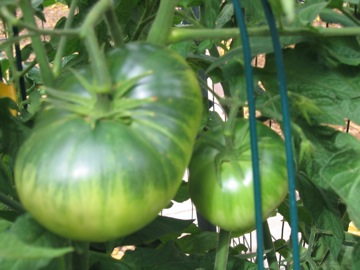
The first freeze is coming to Santa Fe this weekend.  All the gardens and farms are out harvesting all the fruits and vegetables that may be damaged in the three days of cold temperatures.  In my garden, the harvest is producing a lot of green and red tomatoes.  The Farmers Market, CSA and even grocery stores may also have a lot of ripe tomatoes that are from a plentiful harvest.  They may even be on a better deal during the next few weeks.  Here are some tips to preserve and ripen them.

Amy Hetager, Home Grown New Mexico and Local Organic Meals on a Budget Blogger

Ripe Tomatoes-

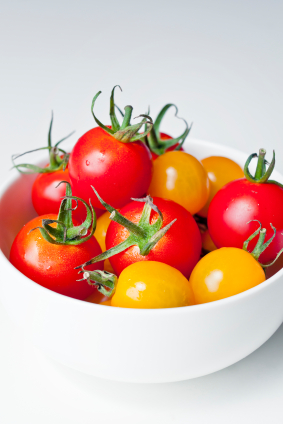
1. Cherry or grape tomatoes can be roasted at 400 degrees with salt, pepper, small amount of olive oil and dried oregano for 45 minutes.  Let cool and store in a glass container in your freezer.  Leave the skins on for extra flavor in a future tomato sauce or soup.

2. Roma or red tomato varieties are good for hot water bath canning or blanching and freezing.  Check the recipe section for tips on canning tomatoes.

3. Heirloom tomatoes have a high-water content and are hard to roast or can.  Drying these in an oven on 150 degrees or a dehydrator can preserve them as a type of sun dried tomato.

Green Tomatoes-

1. John Connell, guest chef from our Wed class, had great advice to pull the entire tomato plant and hang upside down in a window.  The tomatoes will ripen on the plant.

2. Wrap the tomatoes in newspaper or place in a closed paper bag on your counter.  Most of them should start to be ripe in the next few weeks.  They won’t taste exactly as they did on the plant outside, but they are typically better than what you can buy.

3. Cook some green tomato recipes.

My Green Tomato, Green Chile Jam

My Green Tomato Cake recipe


Pasta with Goat Cheese Recipe from Mark

Mark, our first Local Organic Fan has an easy recipe to share.  He adds red bell peppers, but you could add other in season vegetables such as summer squash, carrot shavings or chile.  Make sure that any new vegetable ingredients can cook in the same time as the dish.  Enjoy.

Whole wheat Penne with Goat Cheese

¼ pound Organic Whole wheat Penne, or other style pasta of your choice

½ cup black and/or green olives, in oil or water (organic if possible)

½ red pepper, roasted on the grill (organic if possible)

1 ounce Organic Feta Cheese, mild (I use goat)

1 Tablespoon Organic extra virgin Olive Oil

four or five capers (optional, to taste)

to taste fresh cracked black pepper

serves one as an entree, two as a first course

Prepare pasta according to package directions.  Be sure to cook al dente; pasta will still be firm.  While pasta is cooking, combine olives, red peppers, capers (if used), and olive oil in a small bowl.  Toss to combine.  When pasta is finished, add pasta to bowl and toss lightly to combine.  Add feta cheese, and fresh cracked pepper if desired.  Toss lightly, plate, and enjoy!

As an entree, serve with a fresh, organic salad or other accompaniment.

Total time:  10 minutes

Cost: About $3.00 per serving as an entree

Cooking Beyond Recipes, part 3

Nadine shares more recommendations for cooking styles, food choices and good cookbooks to have in your kitchen.  She will continue to provide tips in this Cooking Beyond Recipes column.  If you missed her first two posts, click here for part one and click here for part two to be introduced to her concepts.

Have you ever thought about when, what and how much you eat?  Here are four simple ways to help your body through food.  By experimenting and carefully observing, we can each find the optimal way to benefit our respective bodies through what we eat.

I would add the following eating concepts:

  • Eat modest portions, and eat slowly.
  • Avoid processed foods, especially anything with more than a handful of ingredients or a list of  mystery ingredients, even if  they’re certified organic. Most of the ingredients you don’t recognize are what I think of as the Horcruxes of corn—tiny bits of the souls of whole kernels of corn that have been extracted by food “science” and embedded in food simulations.
  • During the day, eat every few hours to avoid food cravings. Eat breakfast, lunch and dinner, plus small snacks of whole, fresh fruit, raw vegetables or nuts (not processed snacks) between meals.
  • Try eating animal protein at lunch instead of dinner—you may find that you sleep better.

Meet Mark, a Local Organic Fan

Are you a local organic fan?  This is a great way to talk about why you love organic food and ways that you find local food.  We have our first entry this week to share with you.  Mark has also submitted some of his easy recipes so look for them in future blog posts.  Send us the answers to the questions below and you may be the next Local Organic Fan!

Local Organic Fan

Mark, a Local Organic FanName: Mark Arcuri

Hometown: Patchogue (Eastern Long Island), New York

Why are you a Local Organic Fan?

Three years ago I learned about a blood clot in my left leg. While the clot was superficial and not life threatening, the experience at 47 years old was shocking. I had an interest in healthy cooking and in wellness, but in reality, I didn’t make health much of a priority. I never once attended the gym and, despite the appearance of healthy eating and making sustainable choices, I did those things only in spurts unless I was around others. Indeed, others saw me as much healthier than I actually was. The clot was a game-changer. I looked in the mirror and I saw my dad. I saw the potential for the host of preventable lifestyle-related diseases that he suffered for years. The doctor said that my clot was due to genetics, but I knew better. I believe that genetics merely provide a blueprint of possibilities rather than a destiny. I decided to take charge and from that moment on my life has never been the same.

How do you live a local, organic lifestyle?

I found a new doctor who was in Family Practice and Holistic Medicine. I returned to the gym and hired a personal trainer. I started reading material that I had placed on the back burner, such as the anti-inflammatory guidelines by Andrew Weil, MD. I cleared my cupboards of foods such as certain oils, preserved foods, manufactured foods and anything that did not grow as-it-was, like GMOs. I started shopping in markets offering local and organic foods, such as the Santa Fe Farmer’s Market and La Montanita Food Coop. I prepared more morning and evenings meals at home and packed my lunch.

On frequent overnight travels, I stopped at local markets for fruit and nuts and nonperishables. I committed to reading something new everyday that could support me in my efforts – often a web page, part of a book or an article.

Any inspiration, tips or advice to share with others?

Share what you are doing with others! But, be sure to choose kindred folks. I began talking about what I was doing with family (my dad has since passed, but we made progress), friends and even strangers in the gym and markets. Sharing information with others is a great way to make the intention more real. I also remind myself that modifying my lifestyle is a process that continues to expand and unfold, as does my life. Like anything, it will never be done. So, there is no pressure to do any more than I have time for on a given day. A step is a step is a step. None is big and none is small. Do what you can, and it is enough.

What successes have you had as a result?

Once the momentum got going, I found that my appetite for more was enough to push me forward.

  • Lost nearly 30 pounds without dieting.
  • Learned that wholesome, sustainable ingredients sometimes cost more, but that the cost was balanced by my tendency to buy less – I was not eating less necessarily, but I was wasting less.
  • Discovered that cooking was often quicker, took less energy (mine, and natural resources!), and left me with food that was easily turned into different meals another day.
  • Felt more connected to my community through more purposeful interactions with purveyors, during meals, and in healthy lifestyle-related gatherings.
  • I also became a wealth of information for others, and even inspiring to some. I made peace with my dad and with his choices before he passed away.
  • My work also shifted to its current focus on holistic wellness and helping clients in their transitions to aligning with a healthier, sustainable life.

What are some of your favorite fast and easy dishes that you cook regularly?

  • Grill year round – chicken, fish, occasional beef. Any of these can be enjoyed as-is with a side of a sweet potato, asparagus, steamed brown rice, or fresh veggies/salad of your choice.
  • Eat whole wheat pasta at least twice a week with a fresh sauce. My policy is that the sauce must be prepared in the same time or less than it takes to cook the pasta. A chopped tomato, some basil, minced garlic, olive oil, and fresh ground pepper with a bit of grated cheese is my staple. Maybe add a squeeze of fresh lemon juice. And this sauce doesn’t require cooking at all!

Any final thoughts?

My new lifestyle may sound like a lot to make time for, but it takes me less than an hour including the food preparation and reading. Commitment must follow any vision in order to allow the reality of that vision to manifest. We are all blessed with unlimited choices for how we might manifest the blueprints for our lives. Becoming a Local Organic Fan can be easy and inexpensive. It is the best way that I have found to transform my life by embracing my blueprint, modifying it and building the perfect holistically healthy life.